Who was Sir Francis Bacon? 1st Viscount St Alban, philosopher, scientist, lawyer, statesman and author, there seems no end to his talents and energy. He even designed his own house, though not much remains today. He also happens to be buried in my local church, St Michael’s, St Albans.
This question has come to the fore with the Bacon 400, the 400th anniversary of his death. To explore more about this extraordinary man, parishioners from St Michael’s had the opportunity to visit another place closely connected to him, Trinity College in Cambridge. I am grateful to our local priest Revd Jonny Lloyd for organising the trip which was particularly memorable because of the people, conversations and real sense of community.
Richard Serjeantson and Dr Nicolas Bell gave us an entertaining whistle-stop tour of Trinity College. Stepping inside felt like stepping back in time, but as was explained to us, not all the buildings would have been familiar to Francis Bacon, particularly when he arrived (aged just 12!) with his brother Anthony in 1573.
At that point, the college, which had been founded by Henry VIII 27 years earlier, looked much simpler that it is today.
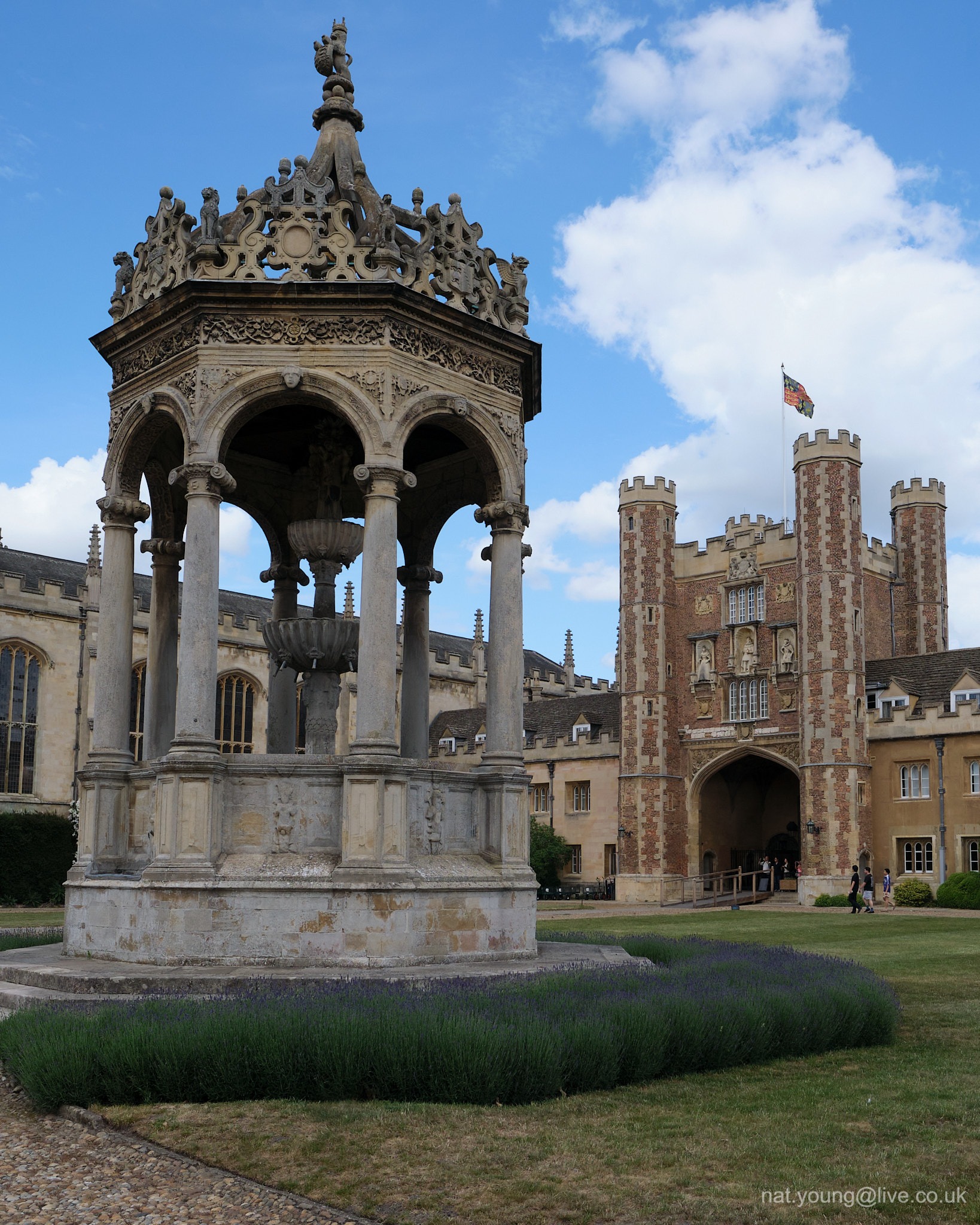
In the 1590s the Master of Trinity College, Thomas Neville, decided to construct the Great Court, using the King’s Hall that had been built in the 14th century, and moving the Clock Tower (King’s Edward’s Gate) stone by stone. The result was and remains the largest private courtyard in Europe, with an Italianate Renaissance style fountain which was added in 1611.
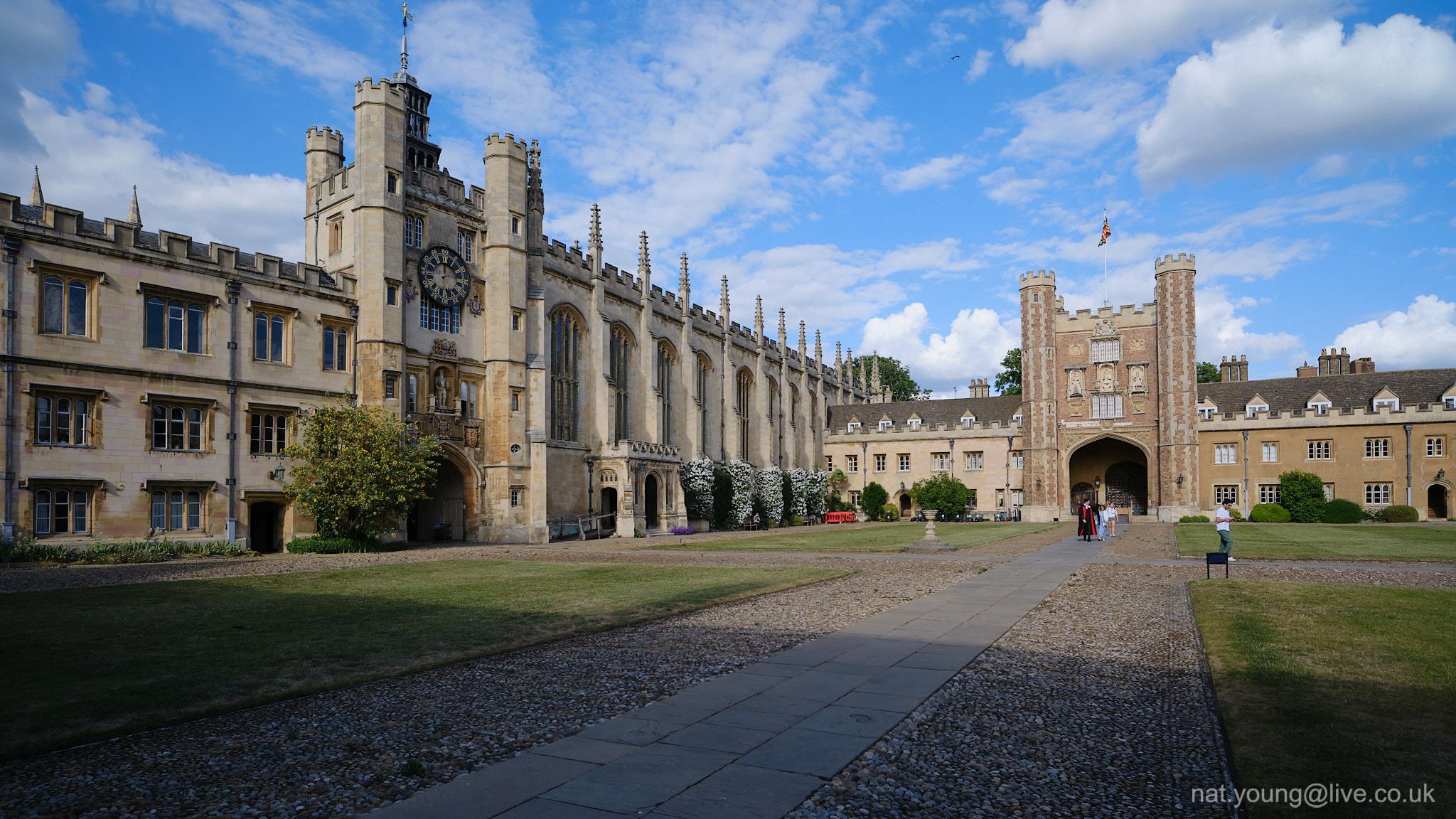
Nevile also created the Hall, and cloistered arched arcades underneath the living quarters on the north and south sides of what is now Nevile’s Court. Our guides believed Francis Bacon would have been familiar with these developments, as he became an MP for the university in 1614.
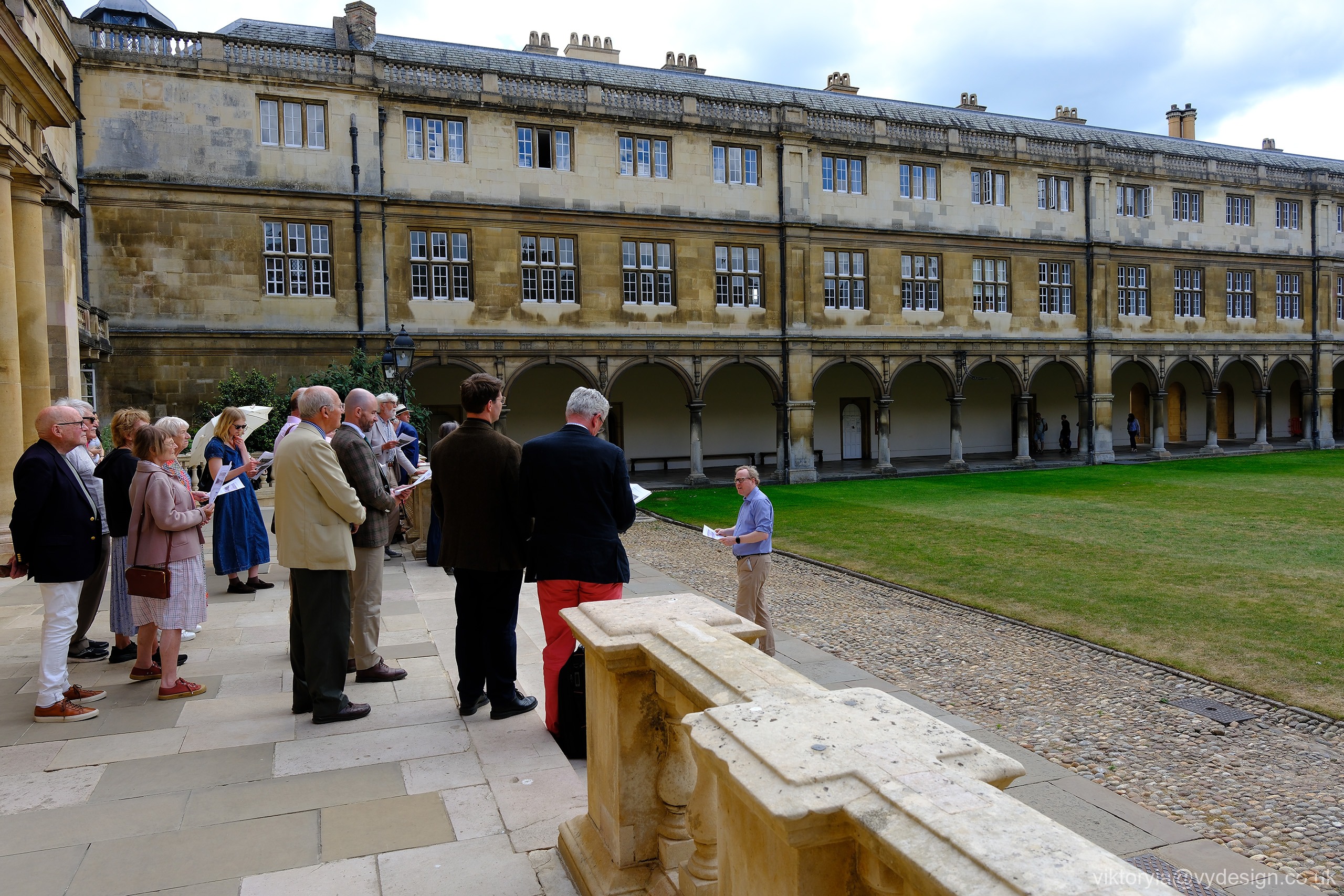
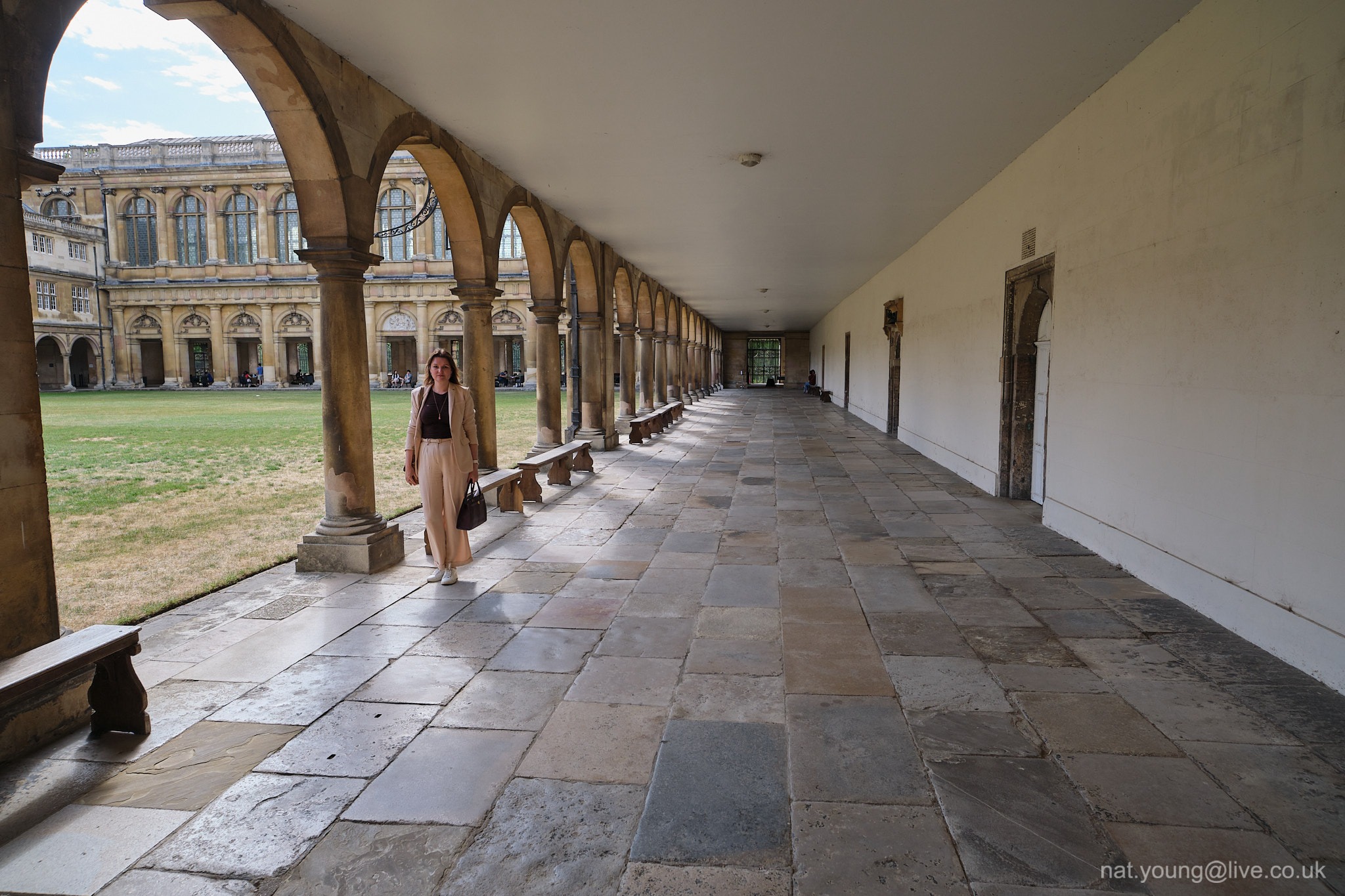
However, full completion of Neville’s Court only happened later in 17 century when the library was designed by Sir Christopher Wren (1676 -1695). Together, with remodelled archways on the north and south, the classical two-storey building closed off the quadrangle.
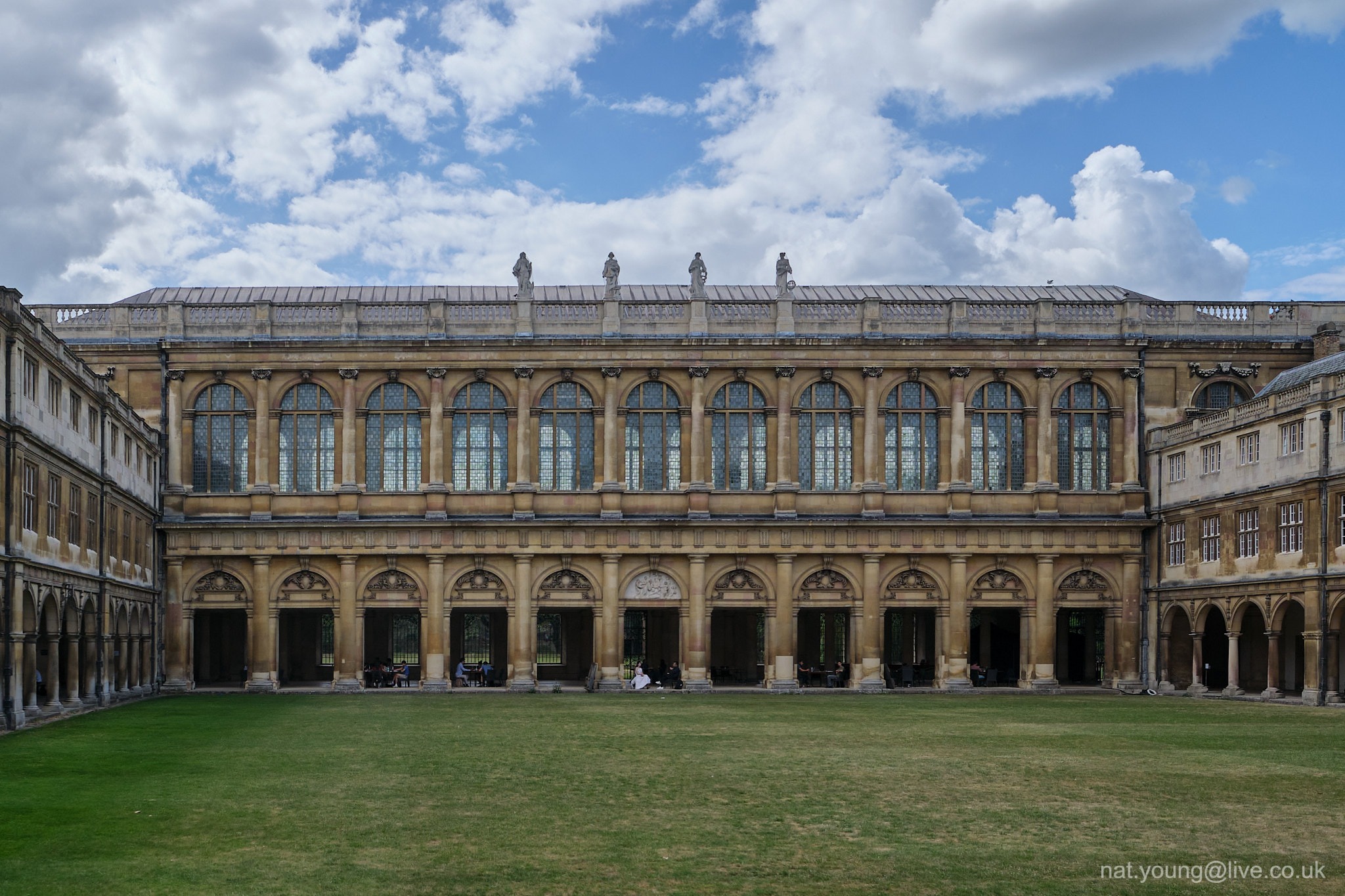
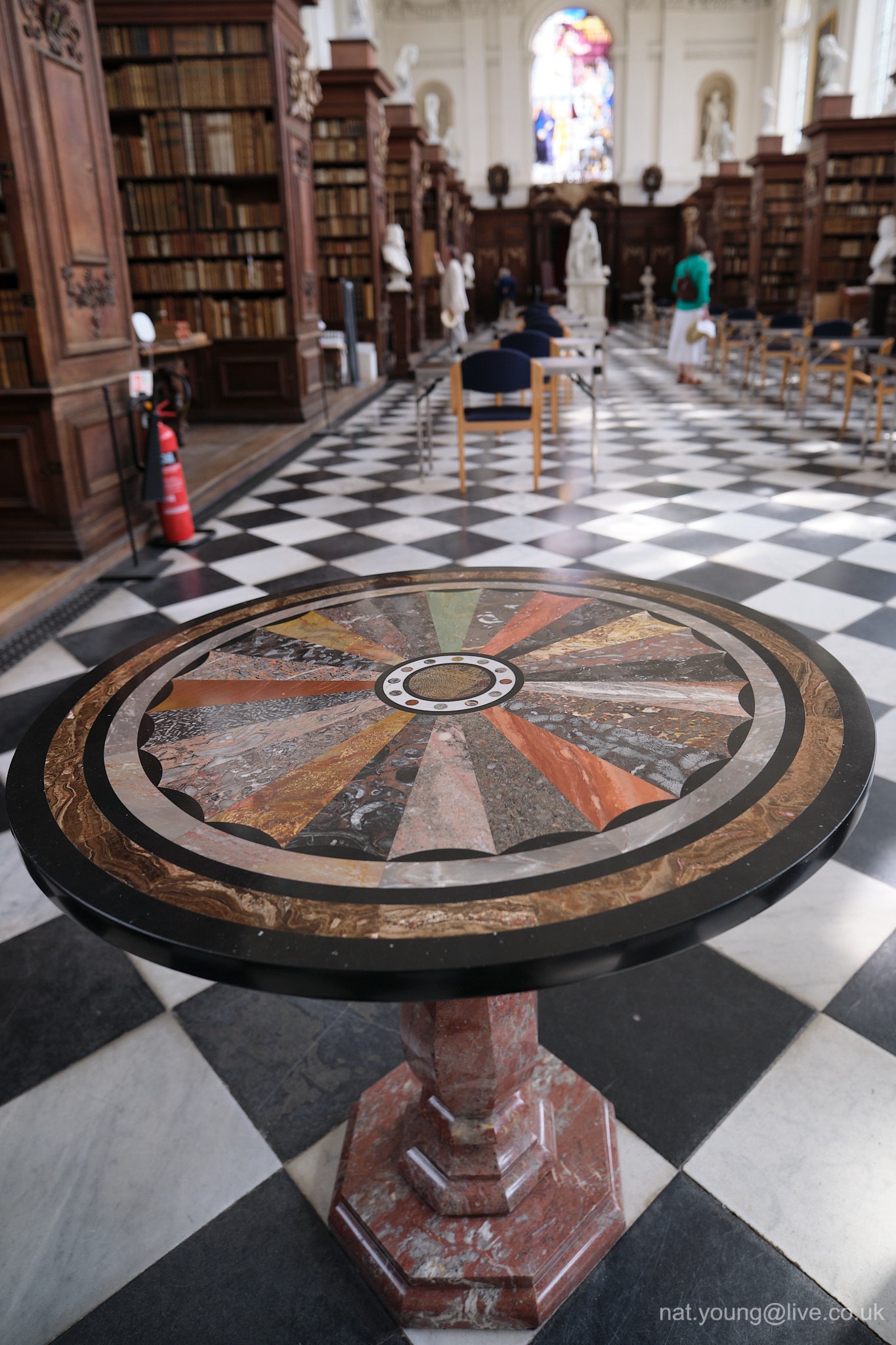
The Wren library is a masterpiece of interior design, as it manages to combine shelving space with extensive natural light. The woodcarving in the library was designed by Grinling Gibbons, a prominent sculptor and woodcarver. Thre are many marbe busts of notable figures, including, of course, Francis Bacon.
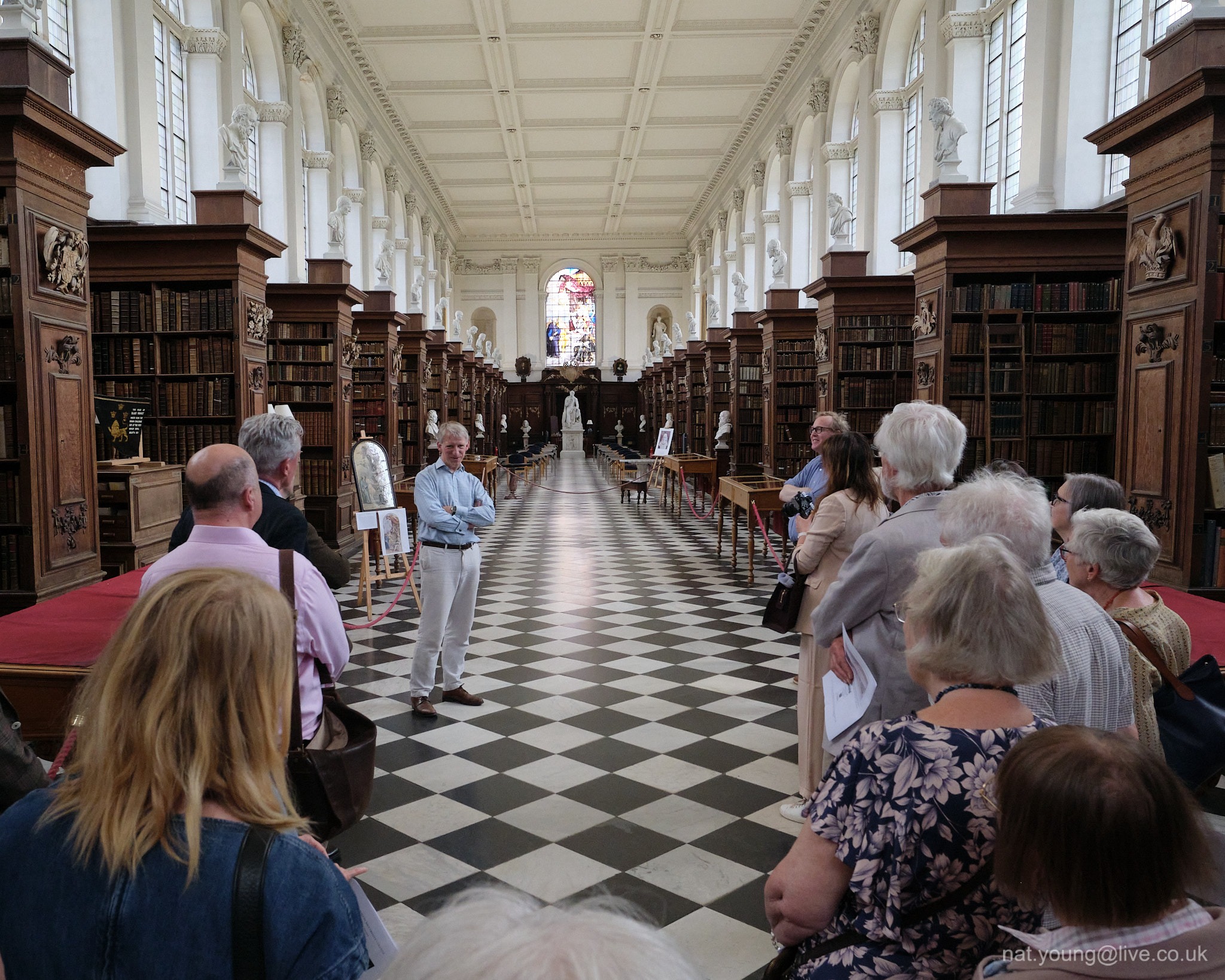
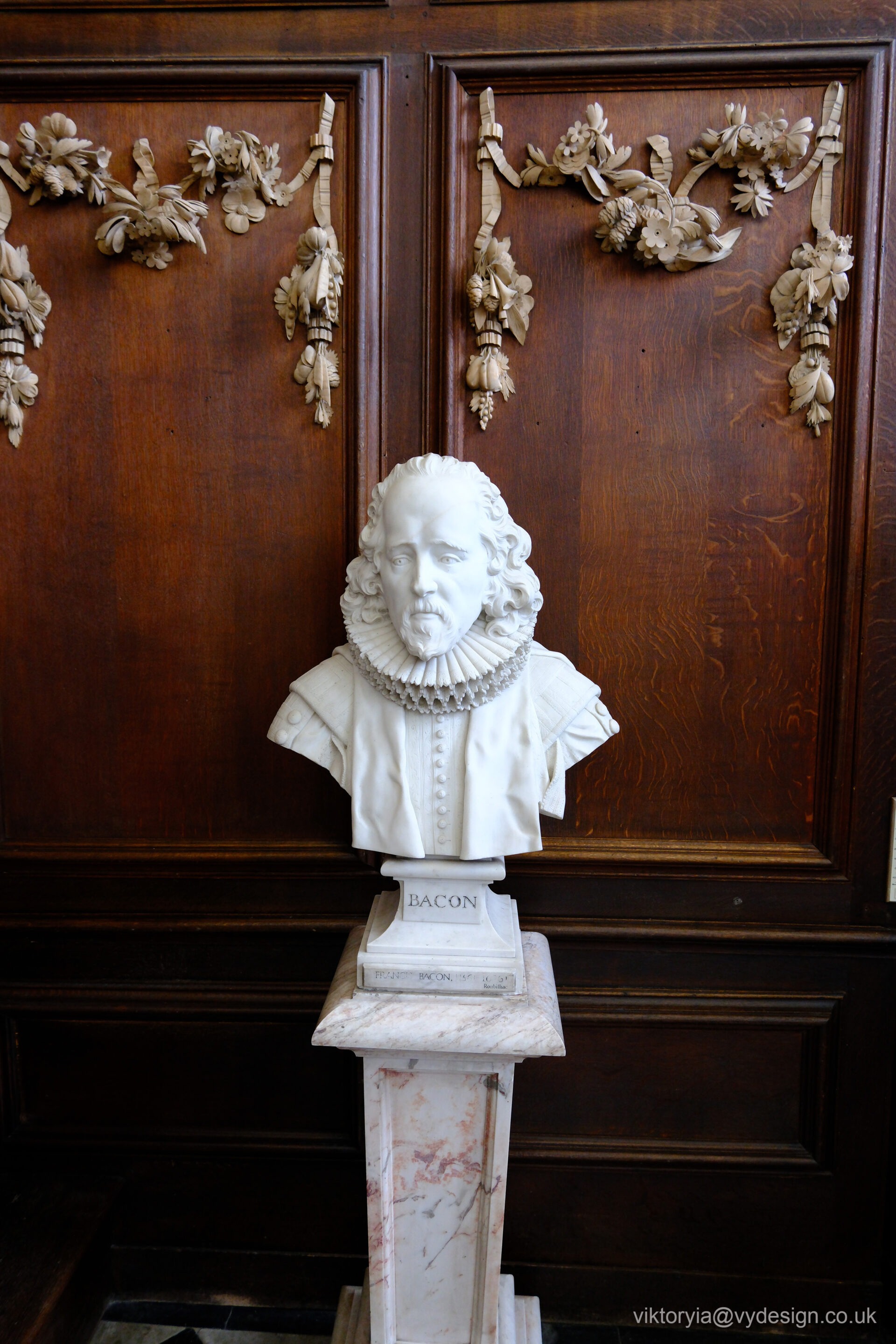
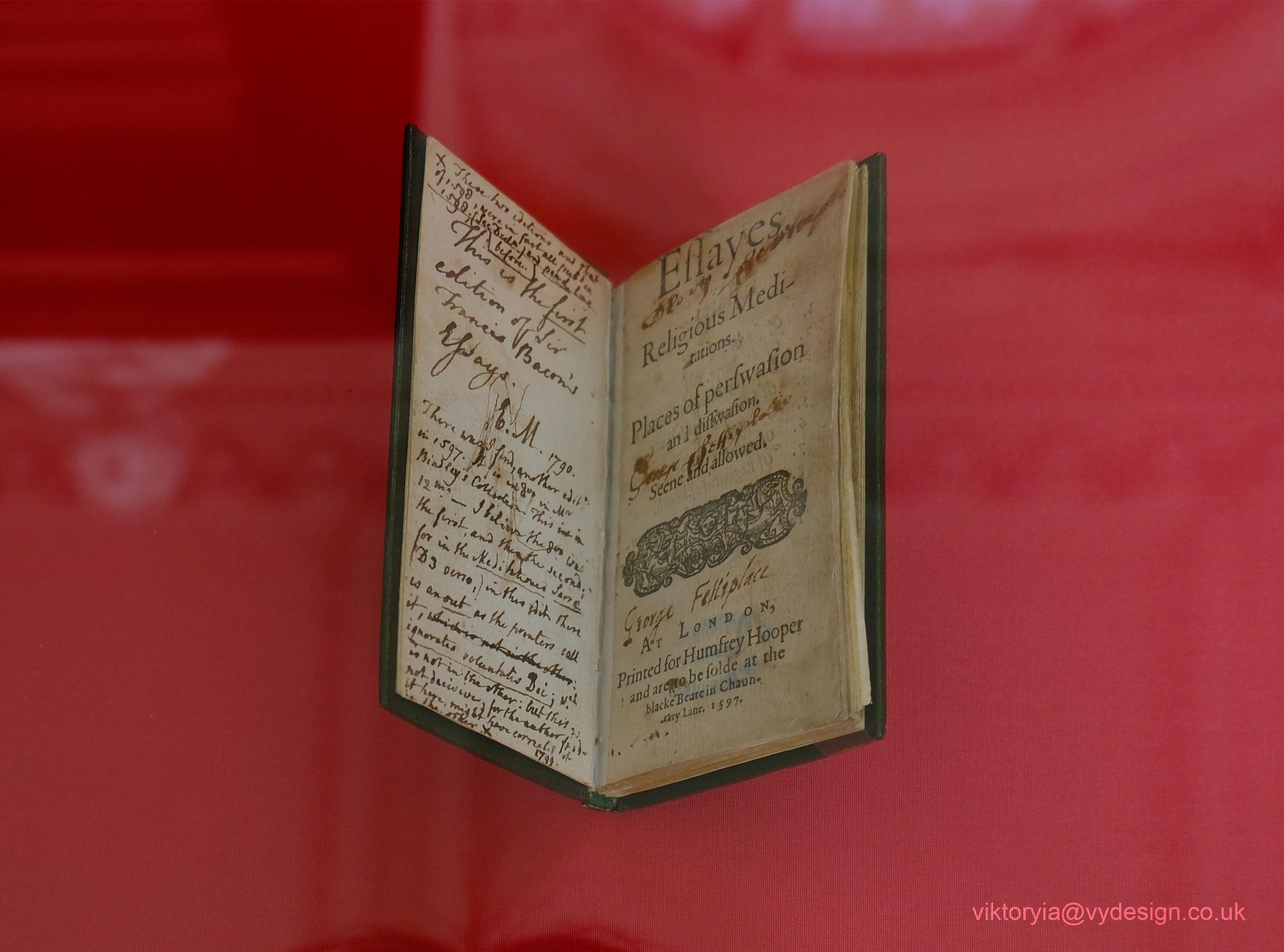
During our trip we had an opportunity to look at display cases of artefacts linked to Bacon were laid out in the celebrated Wren Library, which despite being more than five centuries old, post-dated his life.
A particular interest for me was a 19 century specimen table, red figured marble with pietra dura top.