
Every design brief starts from the desire to improve an existing space or create a new one: more harmonious, more balanced, more efficient.
In this blog I would like to share the story behind creating a shower room as part of an attic conversion – part of a larger renovation project. The brief was for it to serve two new bedrooms.
The project began by creating an inhabitable space under the roof by replacing existing wooden trusses. The space for the shower room involved a sloping roof you can see in the photograph.
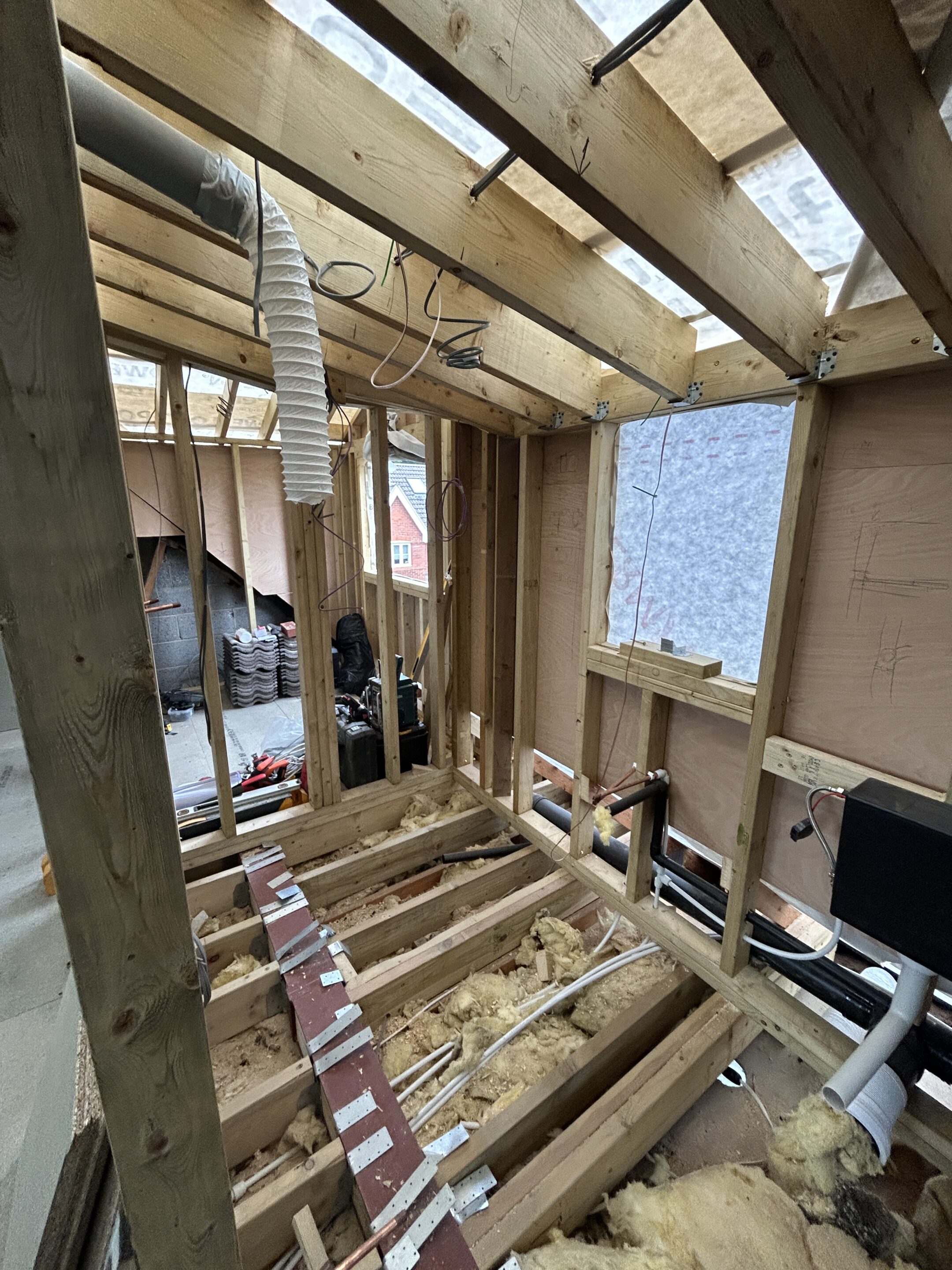
To make this work, VY Design Ltd had been checking the measurements since the roof was first opened up. We expected to have minimum 1.7m head-height by the window, and 2.2m where you stand as you come in the door.
That meant we used the area with the least head height as a wide window ledge, leaving space for a practical recessed shelf and the concealed toilet cistern. We then put the toilet and basin side by side on the window wall, leaving full head-height for all the space used for circulation. You can see the toilet cistern in the first photograph, with the connections for the basin to the left.
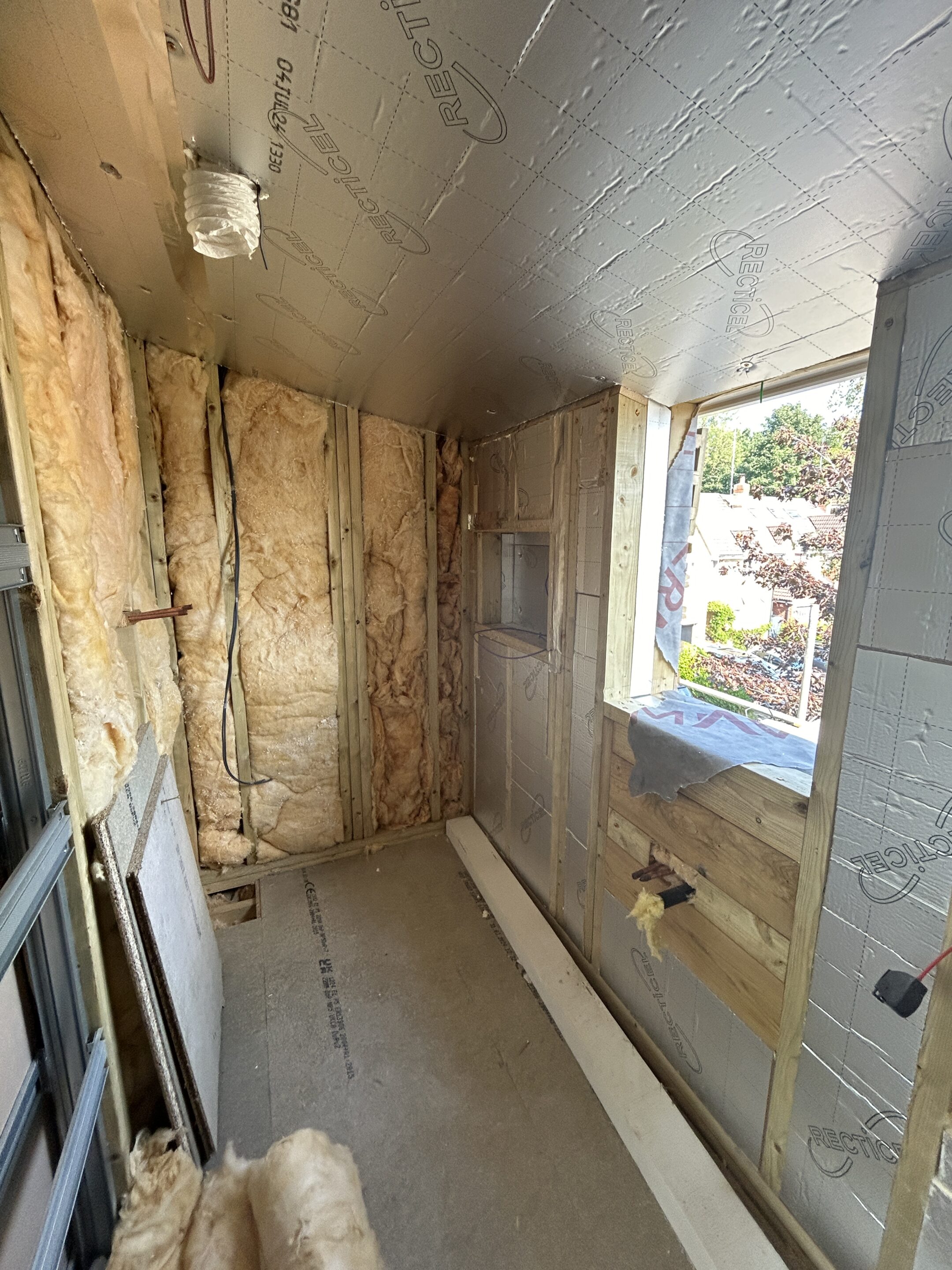
It always looks as though you have more space at the beginning, but modern insulation requirements are very strict. Once the insulation is in place, you can really see how much room you really have!
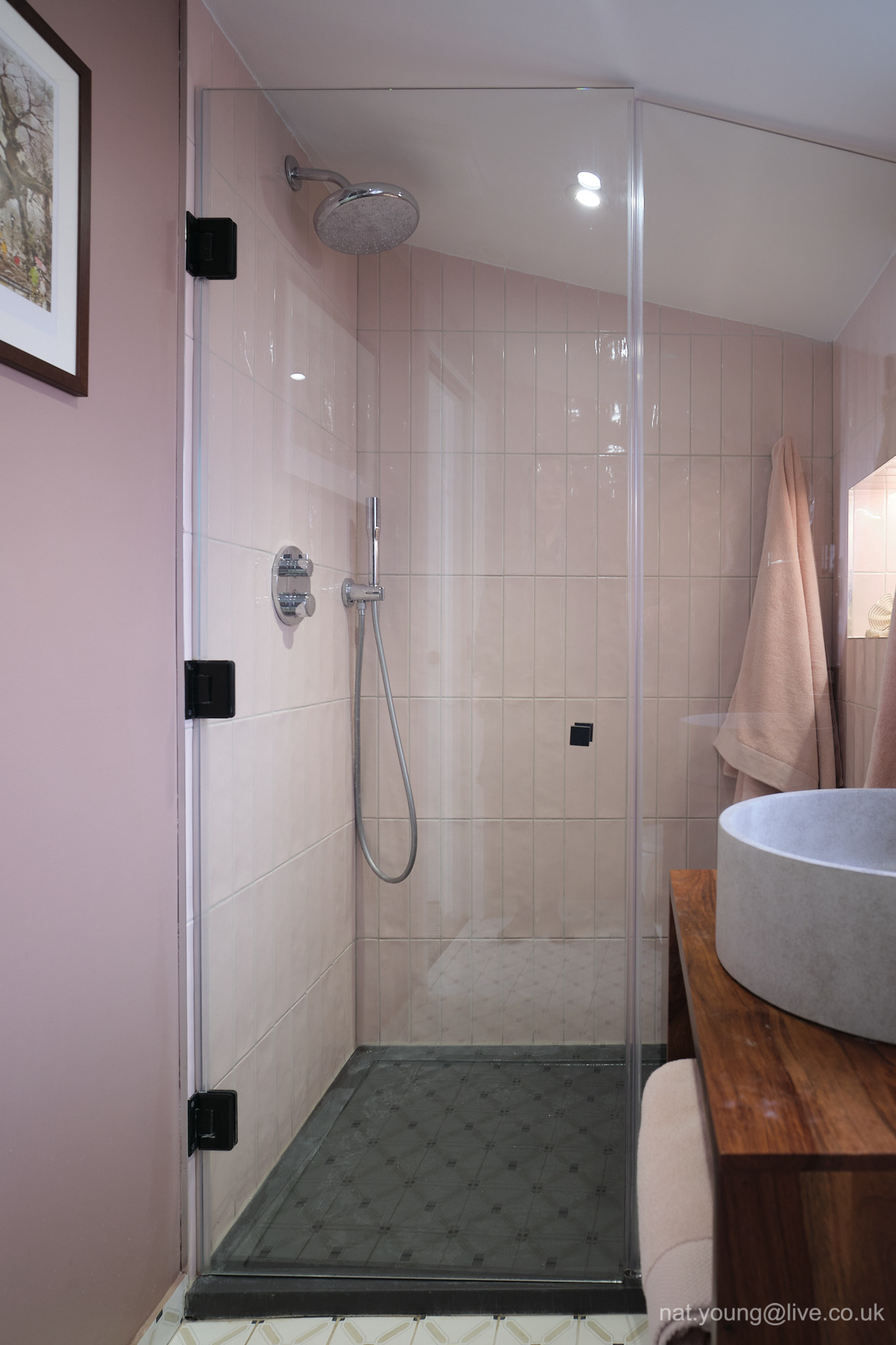
Due to the sloping roof, I had to introduce other bespoke design features: a custom built shower sceen, a wall mounted shower arm and sliding pocket door to enter the room.
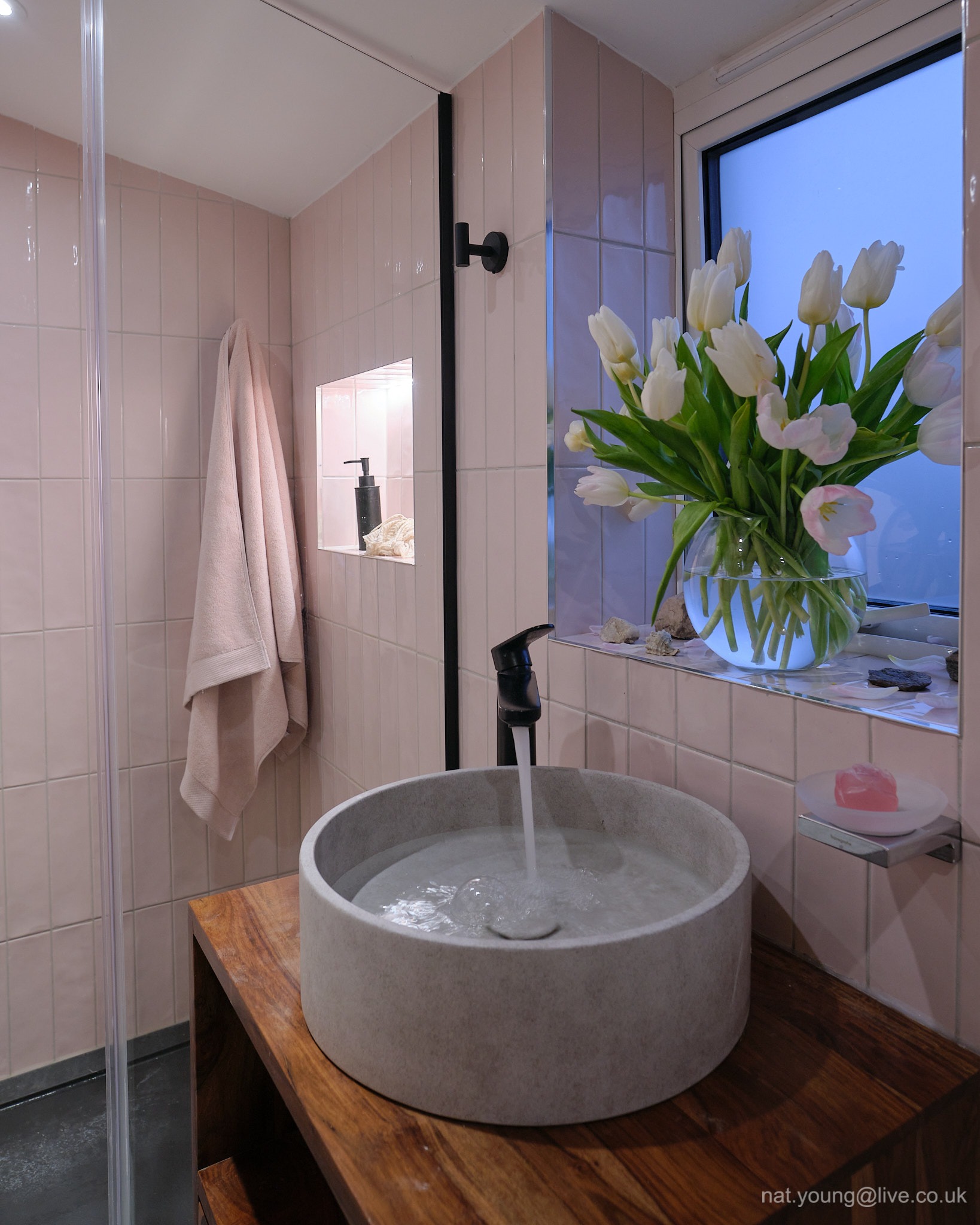
The shower room also needed to look aesthetically pleasing, not just be functional. The brief called for a feminine touch and a distinct personality. That meant that the right colour palette, finishes and fixtures should be used to make a small space feel more spacious and at the same time personal and inviting, particulary in the evening.
I chose metro tiles to create vertical lines and give a sense of greater height. Laying them regular rows creates a feeling of serenity. For the other two walls I reserved a muted rose paint that complimented the tiles without repitition.
Another issue with the room was that it was wide compared to its depth, and placing the shower at one end helped divide the space more harmoniously. I therefore chose a contrasting dark shower tray, which emphasised this effect. The patterned floor tile helped tie this together, as well as being a practical option for regular use (often forgotten in this kind of project!)
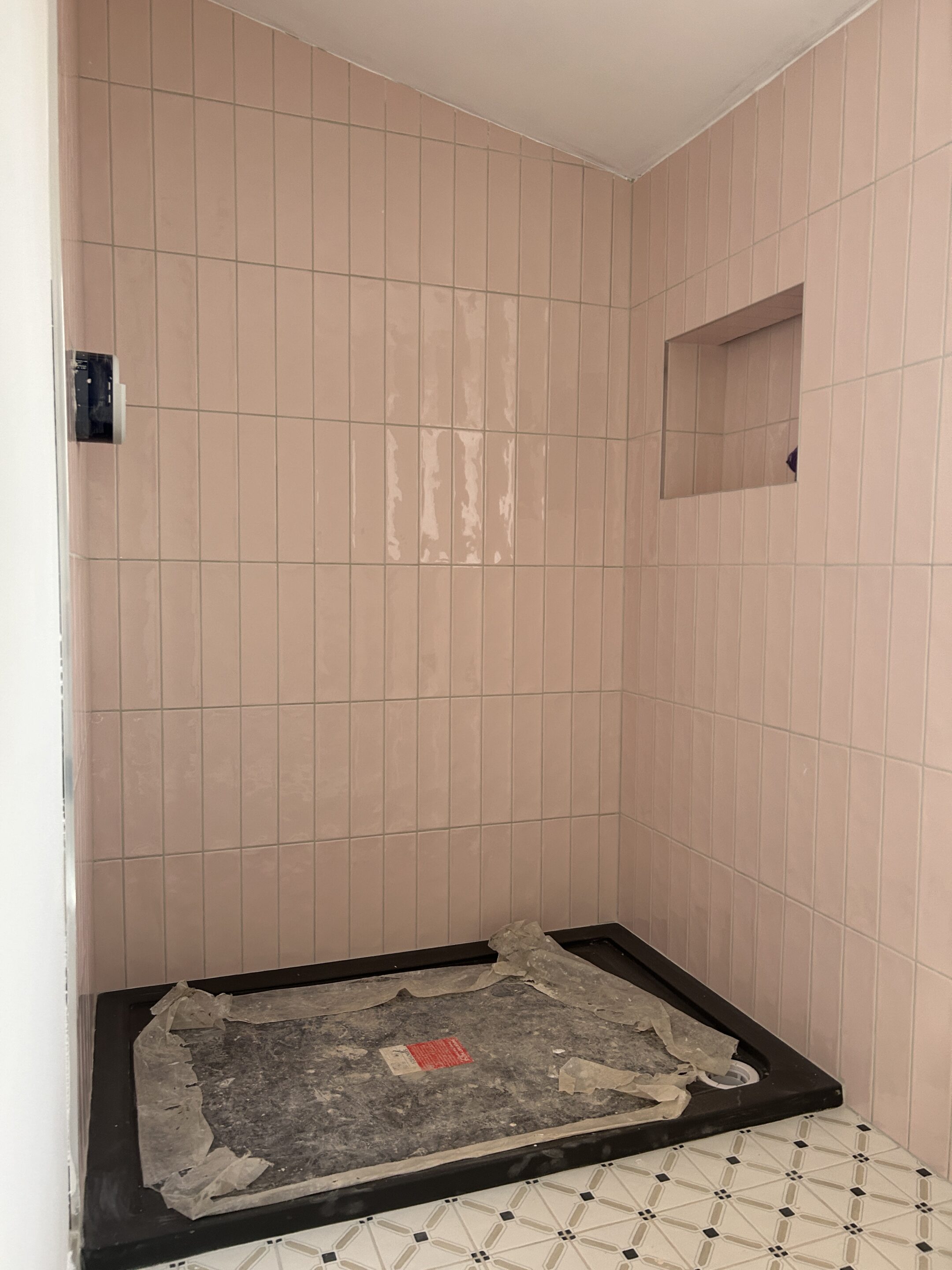
At that point I had to decide on smaller features. An extendable mirror was irreplaceable in this space, because the basin was placed under the window. Spotlighting was essential in view of the limited head height, but an accent light on the recessed shelf added more interest.
We also went the extra mile and introduced a new feature – built in speakers concealed in the ceiling and connected to an audio system in the rest of the house.
Here is what we achieved.
If you would like to watch the video of this shower room, please click the link:
https://www.instagram.com/p/DUsn9t7iV4x/
Obviously this was part of a larger renovation. I hope to provide more details of other aspects of the design, so keep a look out for more blog posts.