
Working with homes and interiors, it is easy to get carried away. Luxury finishes, exciting new products, perfectly planned spaces. In reality, most people have to compromise on what they can afford, and some cannot even call anywhere their home.
To help those people, I decided to volunteer and design a community space at Evolve Housing + Support a London-based charity for homeless people. Their goal is to provide homeless people with a safe, friendly, educational and aspirational environment.
The community lounge and kitchen in their premises at Stockwell was a mess, but they wanted it to be a multifunctional social space where homeless mums could cook, study and learn new skills, while their children played safely nearby.
Louisa Bull, Resident and Engagement Quality Officer at Evolve Housing + Support, worked with me in developing the design, and it was a pleasure to work with her. As I explain in my next blog, children and staff from Marymount International School, an independent day and boarding school for gilrs in Kingston upon Thames, also helped to implement the project.
The Concept
The design concept was based aroung values of Evolve Housing + Support. It had to be designed in that way that the young homeless mothers would feel inspired, confident and ready to learn new skills. while their children would feel safe and thrive in a great learning and creative enviroment.
The community lounge had a view out to the King George’s House historically known as a home for working boys aged 14-18.
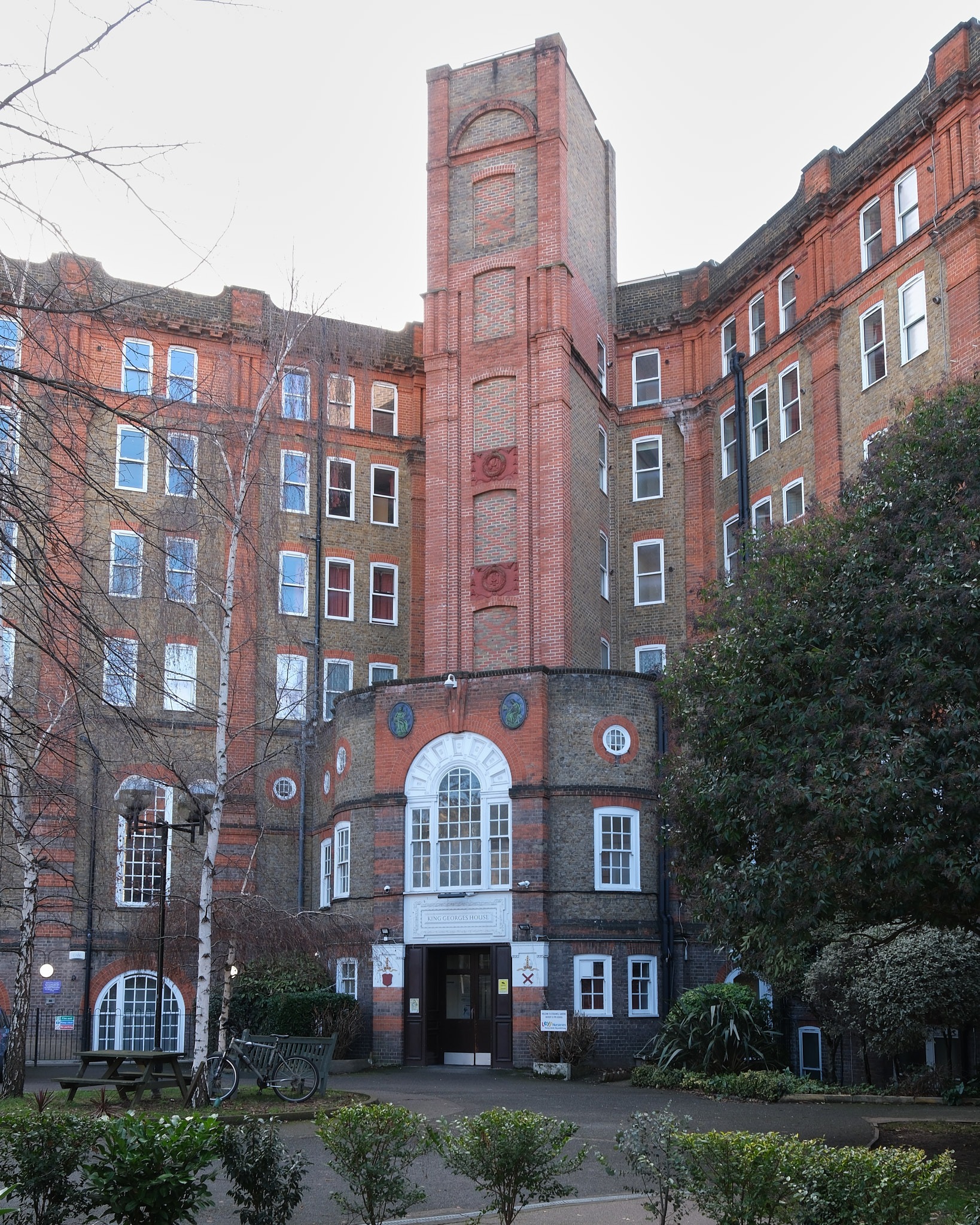
The lounge needed to include a kitchen, children’s play area, and an area for educational workshops and training. The budget was very small, so everything had to be carefully chosen with value in mind.
The Design
The space I was working with was an awkward L-shape, long and thin. To meet the brief, I introduced a broken-plan layout where three areas would flow freely from one to another, without having clear physical boundaries yet being separate visually.
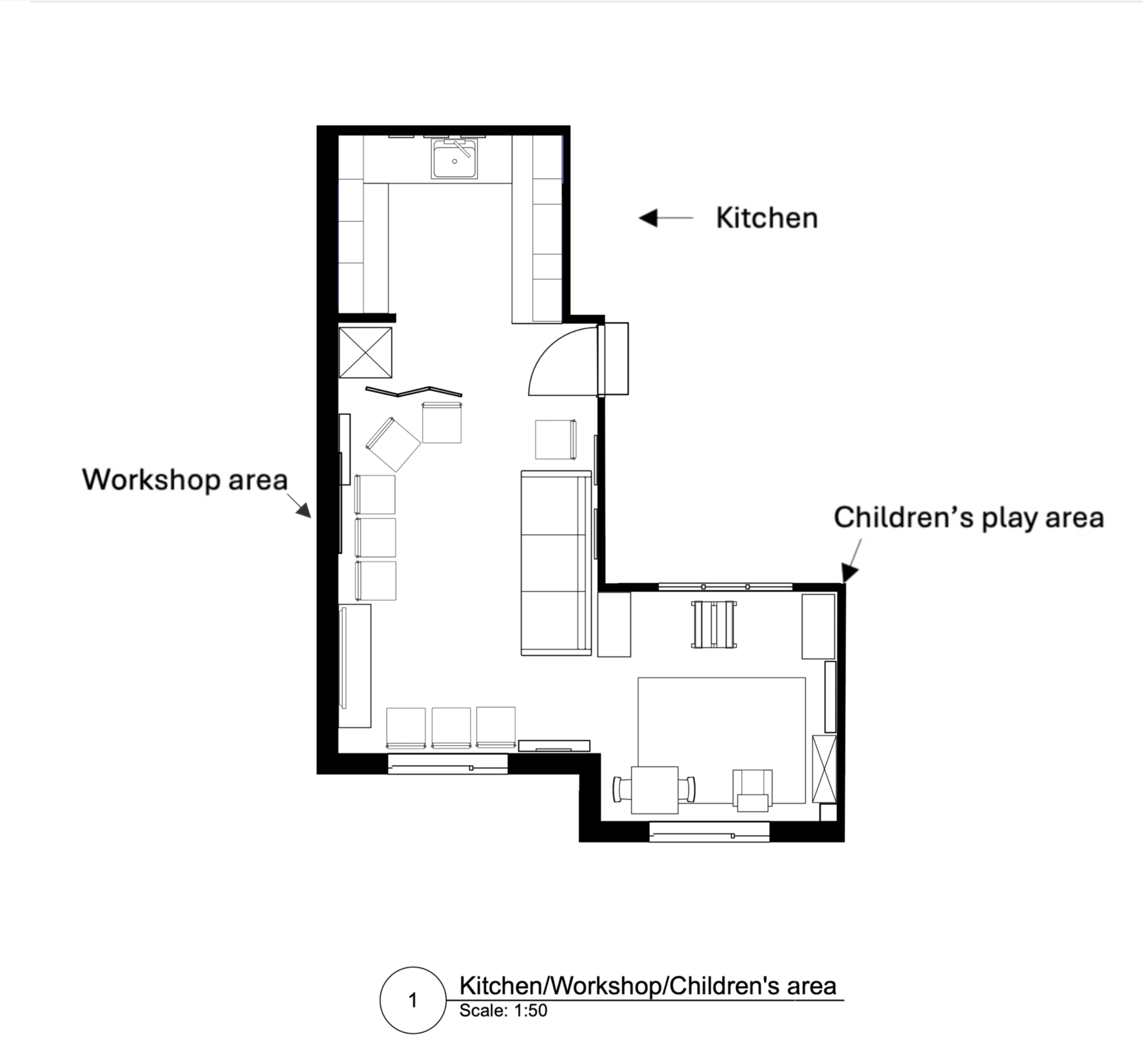
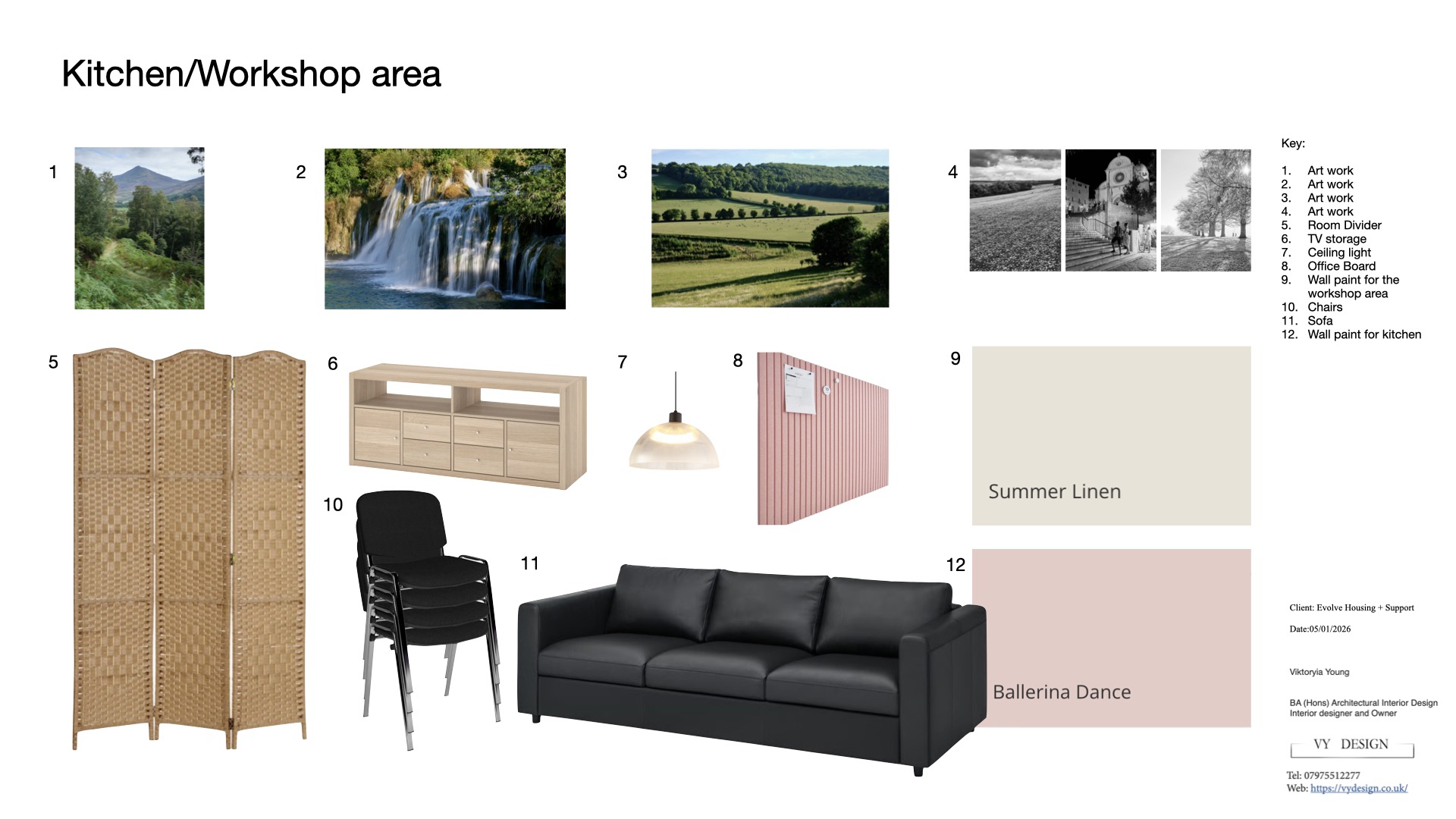
I proposed to use colour as a story-teller for the space. Three colours – subtle pink, oatmeal and refreshing green – indicated changes in the use of the space. I identified three readily-available and durable Dulux paints to meet this requirement: Ballerina Dance, Summer Linen and Willow Tree.
I also used room dividers – a screen and storage units – to break the three dimensional space in the vertical plane. References to nature, with its healing and calming properties, were included in furniture, accessories and artwork.
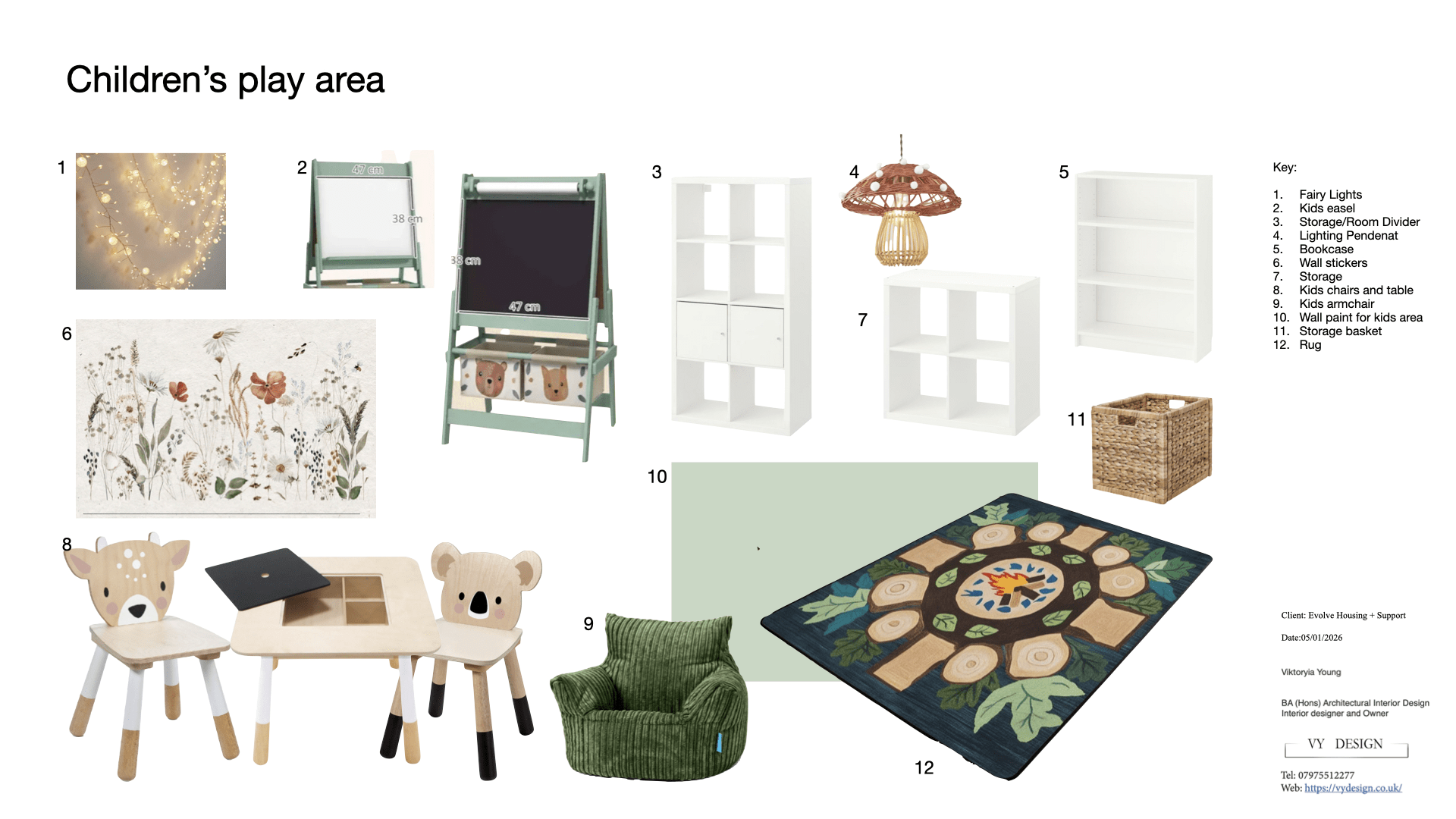
The children’s area was designed to encourage little ones to feel as a part of an imaginary natural world. The area was subdivided by specific activites; drawing on the chalk board, reading using a little reading chair, working at small table.
I also reserved space for children’s art works on the wall, with room for sculptures and craft items on the shelves.
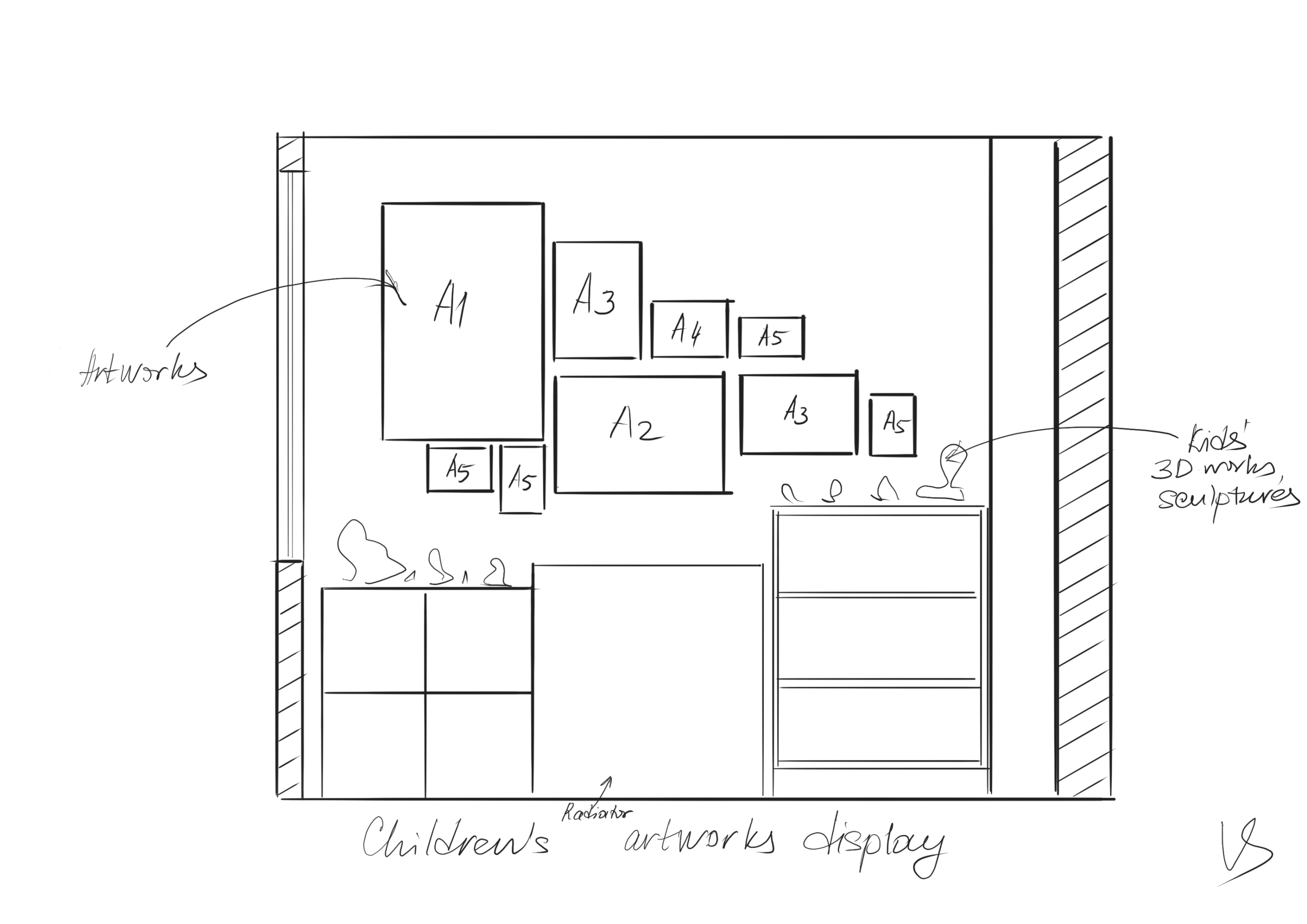
There would also be room for a notice board and photographs on the walls, while the sofa was better aligned with the television.
If you want to know how our collaboration went, please read my blog about the implementation of the design which is coming out soon.